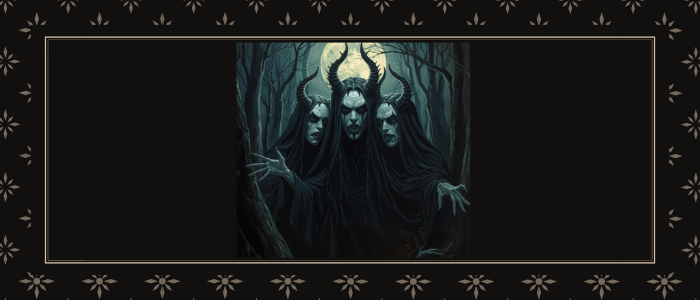
Hekate occupies a central place in the history of witchcraft as a liminal goddess—one who stands at the thresholds between worlds. In ancient belief, she was revered as the goddess of witchcraft, night, crossroads, and the underworld, presiding over spaces where ordinary rules dissolve and transformation becomes possible.
In classical antiquity, Hekate was invoked during the night, particularly in matters of dreams, visions, and unexplained nocturnal apparitions. She was believed to move freely between realms: life and death, light and darkness, the conscious and the unconscious. For this reason, her presence was sought not in temples of daylight, but at crossroads, doorways, grave sites, and in the silent hours before dawn.
As a witch-goddess, Hekate embodies transition. She represents the passage between awareness and the hidden layers of the mind, making her a powerful figure in practices concerned with altered states of consciousness. Dreams under her domain were not merely symbolic, but prophetic—messages from deeper realities that demanded interpretation and courage.
Hekate is especially associated with prophetic dreams, nightmares, and shadow work. Rather than offering comfort, she confronts the seeker with what is repressed or feared. Through this confrontation, she becomes a guide of initiation: one who leads through darkness toward transformation. In witchcraft traditions, to work with Hekate is to accept change, to stand at the threshold, and to emerge altered—marked by insight, power, and an expanded understanding of the self.