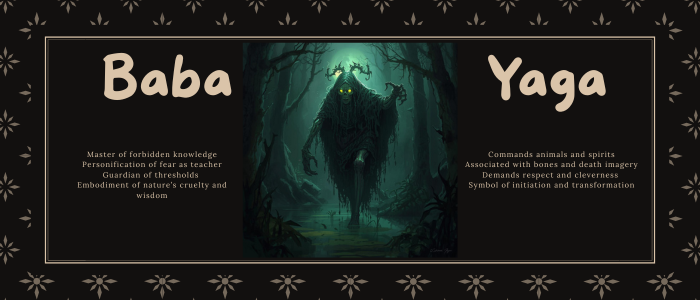
Baba Yaga is an enigmatic and fearsome figure, a crone of ancient Slavic folklore who dwells deep within the dark and untamed forests of Eastern Europe. She is often described as a tall, gaunt woman with a long, crooked nose and iron-like teeth. Her eyes are deep and penetrating, capable of seeing through the souls of those who dare to seek her out.
She lives in a hut that stands on chicken legs, which can move and turn to face any direction at her command. The hut is surrounded by a fence made of human bones, with skulls adorning the tops of the posts. This eerie abode is said to spin and creak on its legs, making it nearly impossible to find and reach.
Baba Yaga is a master of dark magic and possesses a vast knowledge of spells, potions, and enchantments. She is often portrayed as a trickster, leading those who come to her in search of wisdom or assistance through a series of tests and challenges designed to test their courage, wit, and resolve. Those who fail her tests are often devoured or cursed, while those who succeed may be granted their desires or given the knowledge they seek, albeit at a steep price.
Despite her malevolent reputation, Baba Yaga is also a complex and multifaceted character, sometimes aiding those in need or offering wisdom to the worthy. She is deeply connected to the natural world and the spirits of the forest, and her motivations are often shrouded in mystery, making her a compelling and unpredictable figure in Slavic mythology.
Props
Baba Yaga, the iconic witch from Slavic folklore, is associated with several distinctive props and symbols that are often depicted in tales, artwork, and performances. Here are some typical props and items associated with Baba Yaga:
-
Mortar and Pestle: Baba Yaga is often depicted using a large mortar and pestle, which she uses to grind herbs and ingredients for her potions and spells.
-
Broom or Besom: Baba Yaga travels in a flying mortar, steering it with a pestle, and sweeps away her tracks with a broom made of silver birch.
-
Hut on Chicken Legs: Baba Yaga’s dwelling is perhaps her most iconic prop. Her hut stands on chicken legs and is often depicted as a small wooden cabin surrounded by a fence made of human bones, with skulls on the tops of the posts. The hut can move and turn to face any direction Baba Yaga desires.
-
Iron Teeth: Baba Yaga is sometimes depicted with sharp iron teeth, emphasizing her fearsome and menacing nature.
-
Lantern or Candle: In some tales, Baba Yaga is said to carry a lantern or a candle made of human skull, which lights her way through the dark forests.
-
Bones and Skulls: As mentioned, Baba Yaga’s fence is made of human bones, and she is often surrounded by or adorned with bones and skulls, symbolizing her connection to death and the underworld.
-
Magical Artifacts: Baba Yaga is often associated with various magical artifacts, such as enchanted dolls, amulets, and talismans, which she uses to cast spells, create illusions, and protect herself.
-
Herbs and Potions: Baba Yaga is a master of herbalism and potion-making, so she is often depicted with a collection of herbs, plants, and bottles filled with magical potions and concoctions.
-
Animal Companions: Baba Yaga is sometimes accompanied by magical animals, such as a black cat, a raven, or a serpent, which serve as her familiars and assistants.
-
Spells and Scrolls: Baba Yaga is a powerful witch with extensive knowledge of spells and enchantments, so she is often depicted with scrolls, books, and other tools of magic.