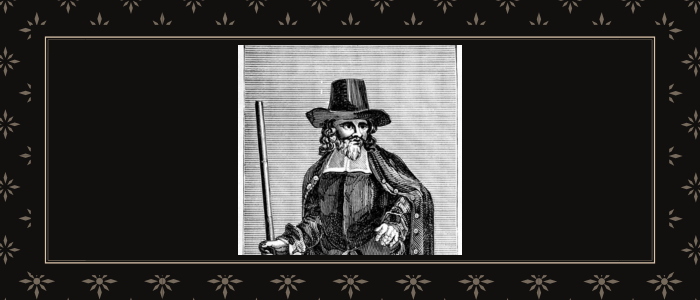
Matthew Hopkins was an English witch-hunter active during the English Civil War, chiefly between 1644 and 1647. He styled himself “Witchfinder General,” a title he adopted without any formal legal appointment. Operating mainly in East Anglia, Hopkins became the most notorious witch-hunter in English history.
Hopkins emerged in a period of deep social anxiety. England was fractured by war, religious conflict, disease, and economic hardship—conditions that encouraged the search for scapegoats. Drawing on Puritan beliefs and popular demonology, Hopkins claimed that witches had made pacts with the Devil and were responsible for misfortune in their communities.
Working with his associate John Stearne, Hopkins employed interrogation methods that were legally dubious but widely tolerated at the time. These included prolonged sleep deprivation, searching for so-called “witch’s marks,” and observing suspects for the presence of animal “familiars.” While torture was technically illegal in England, these practices often coerced confessions.
Hopkins’ campaigns led to the execution of an estimated 100–300 people, mostly women, a figure that far exceeds any other period of English witch trials. His influence declined rapidly after 1647, when public criticism grew and judicial skepticism increased. He died in the same year, likely of natural causes.
Today, Matthew Hopkins is remembered less as a lawful investigator and more as a symbol of moral panic—illustrating how fear, ideology, and authority can combine with devastating consequences.